Canon is built around a simple observation: the most important parts of a streaming community usually disappear first.
Running jokes, legendary mistakes, recurring references, community bets, and lore-heavy moments all live in chat for a few hours and then dissolve into scrollback. What remains is usually fragmented memory. Canon turns those moments into something durable. Not by trying to replace the stream itself, but by giving the community a place to preserve what the stream keeps creating.
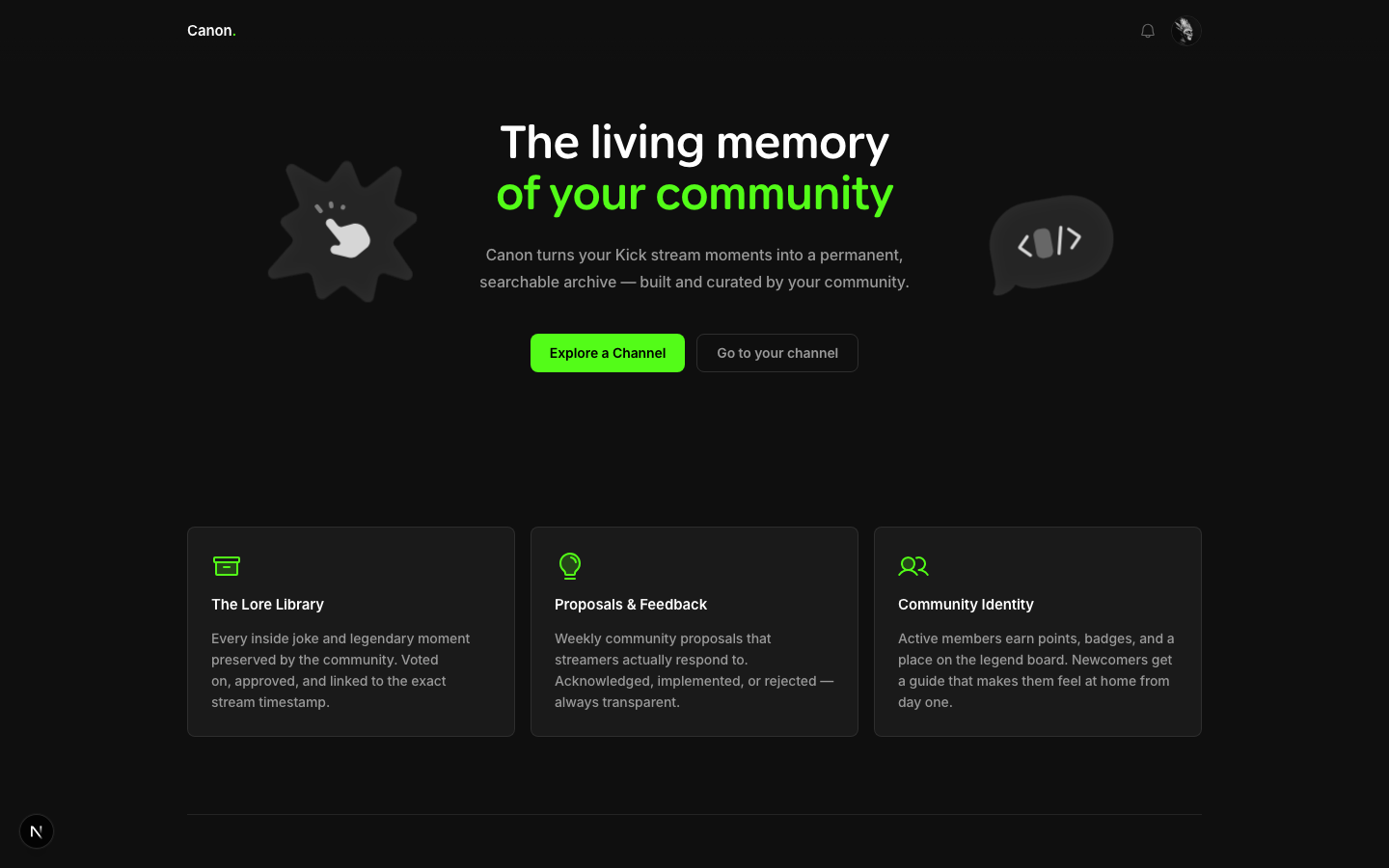
It is best understood as a community memory system for Kick channels. Each streamer gets a dedicated space where lore, proposals, members, and channel identity can live beyond the live chat window.
The Core Idea
Most community tools for streamers are built around real-time participation. Canon is built around continuity.
The product gives each channel a structured space for preserving and organizing community culture. That includes:
- lore entries that capture memorable moments
- proposals that let viewers suggest and vote on ideas
- member identity through points, badges, and ranking
- discovery surfaces for finding channels before joining them
- onboarding that helps new viewers understand the community faster
This makes Canon feel less like a dashboard and more like a living archive for a streamer’s audience.
A Per-Channel Product
One of the strongest ideas in the app is that everything is organized around the channel itself.
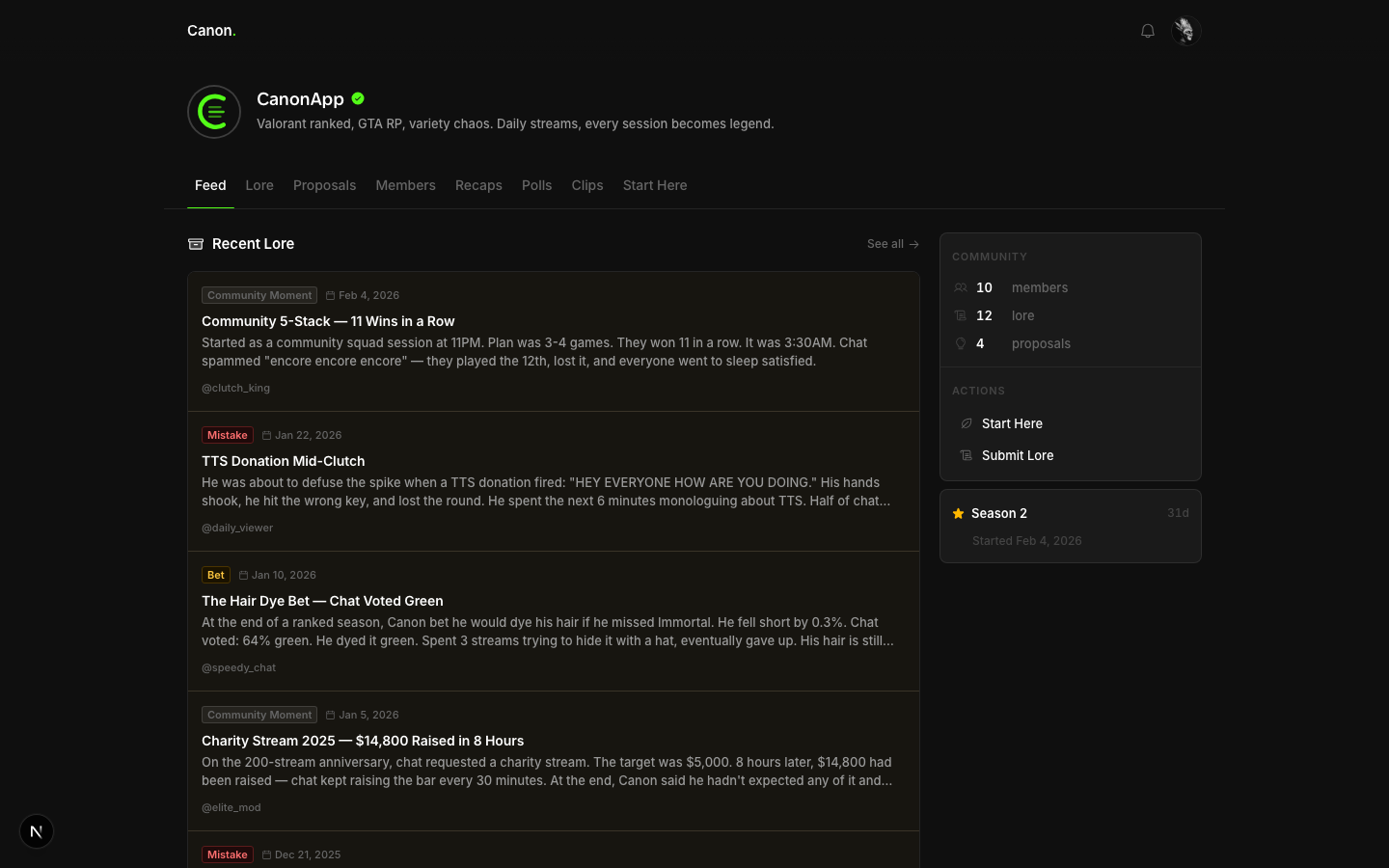
Each Kick channel gets its own self-contained experience with a lore feed, proposals board, recaps, polls, clips, members, leaderboard, settings, and onboarding flow. The structure is not generic multi-tenant software for its own sake. It mirrors how communities already think: people do not join a platform first, they join a channel and its culture.
That gives the product a very clear center of gravity. Every major surface answers the same question from a different angle: what does this community care about, and how does a newcomer understand it quickly?
Lore as Product, Not Decoration
The lore archive is what gives Canon its personality.
Instead of treating memorable moments as background flavor, the app makes them first-class content. Viewers can submit entries, browse them later, and filter through the moments that define a channel over time. This turns culture into something searchable and navigable.
That matters because communities often become hard to enter once they accumulate history. Insider references stack up. New viewers miss context. Canon solves that by giving the channel a structured memory layer instead of leaving everything trapped inside VODs and chat logs.
Proposals Create a Better Feedback Loop
Canon is not only about preserving the past. It also gives viewers a more legible way to influence what happens next.
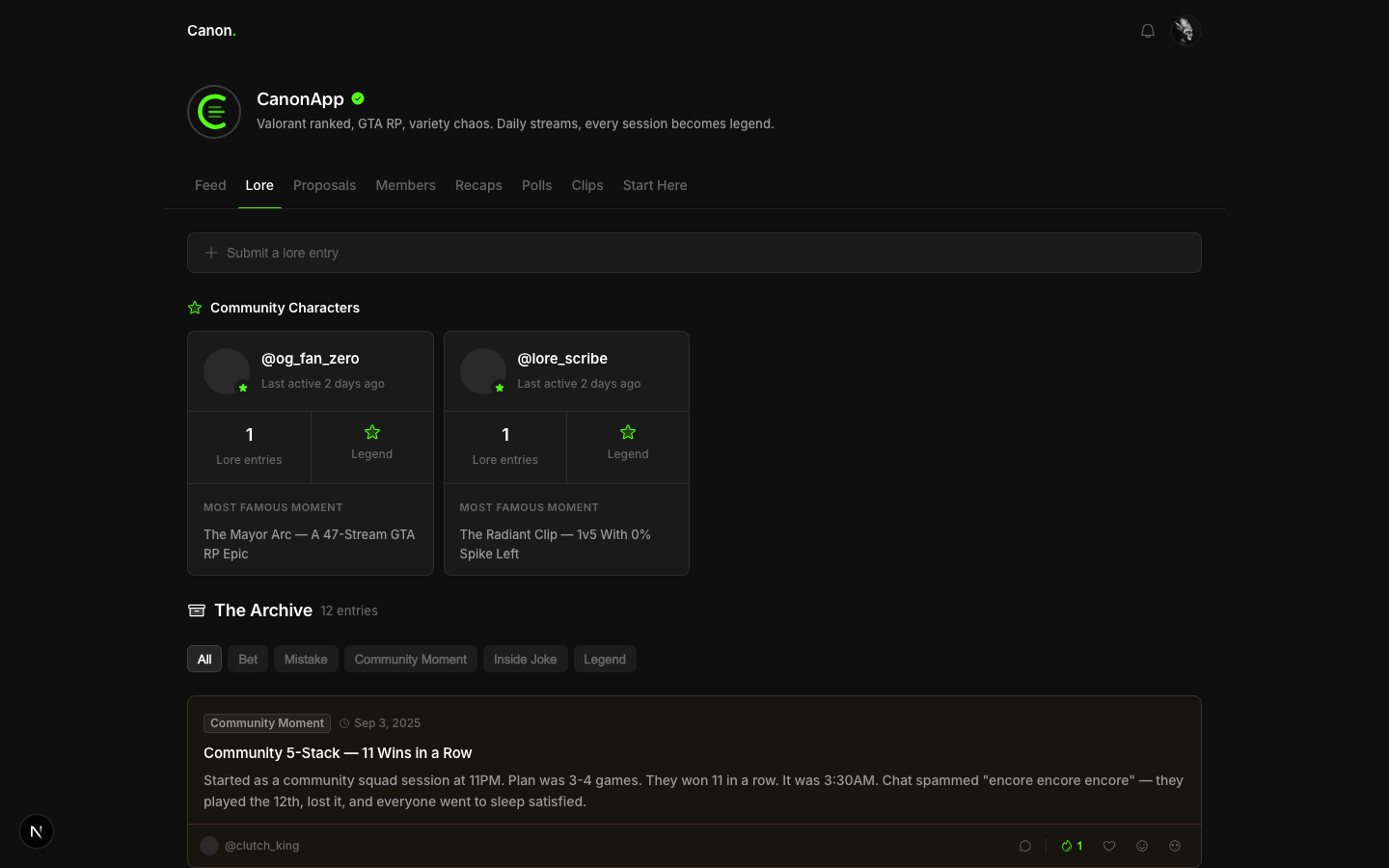
The proposals system lets the community submit ideas, vote on them, and then see transparent outcomes from the streamer. Instead of disappearing into chat spam or vague promises, feedback becomes visible and trackable. The possible outcomes matter here: acknowledged, implemented, or rejected. That creates a more honest relationship between the streamer and the audience.
It is a small but meaningful shift. Community feedback stops being chaotic and becomes part of the product’s structure.
Identity Without Turning Into a Generic Social App
Canon also understands that communities need a sense of internal identity.
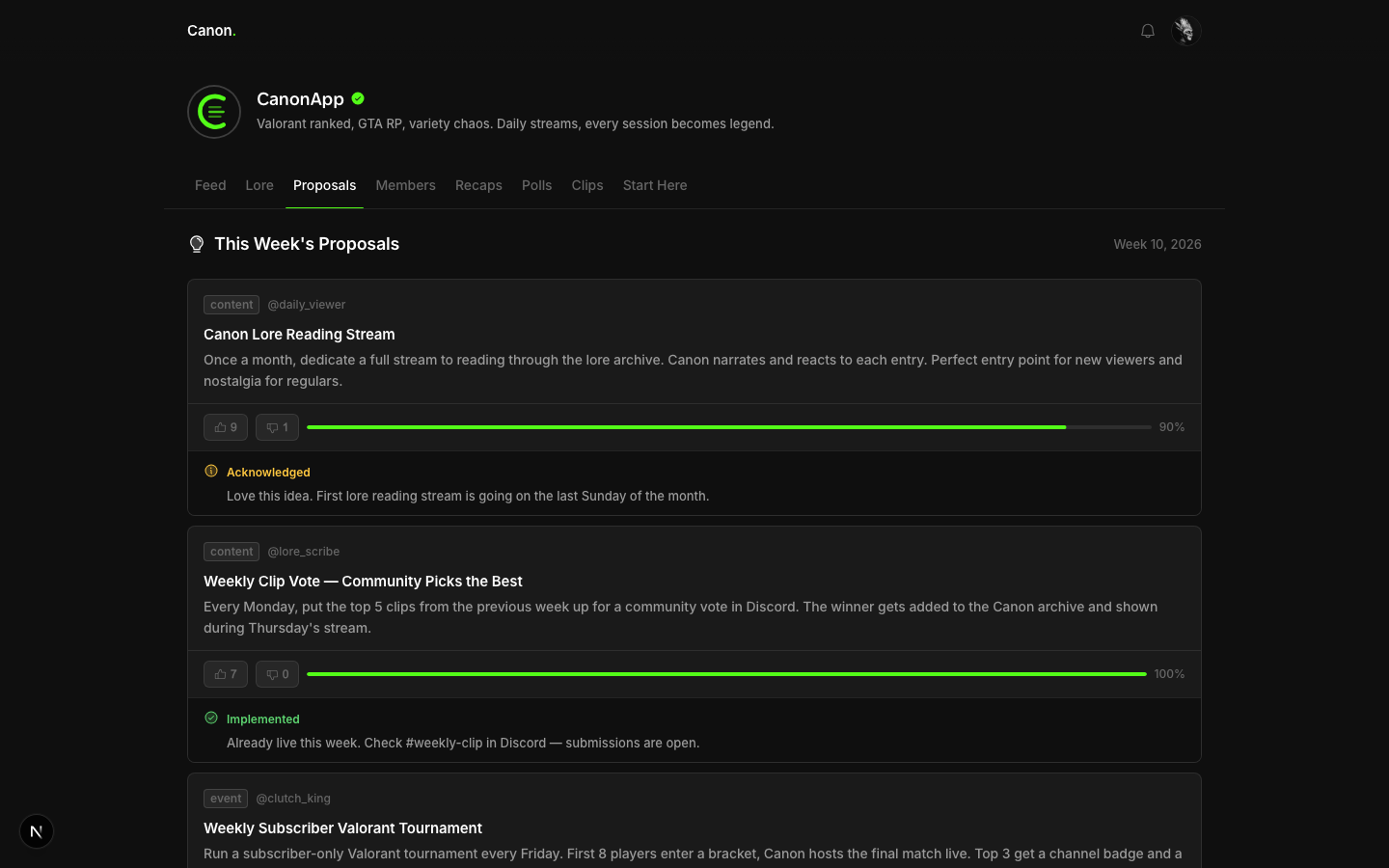
Members can earn points, badges, leaderboard placement, and special states like Legend. These mechanics help regulars feel recognized, but they do not overwhelm the core product. The identity layer supports the channel instead of trying to become a full standalone social network.
That balance is important. The product stays focused because identity is tied back to participation inside a specific community rather than abstract platform-wide status.
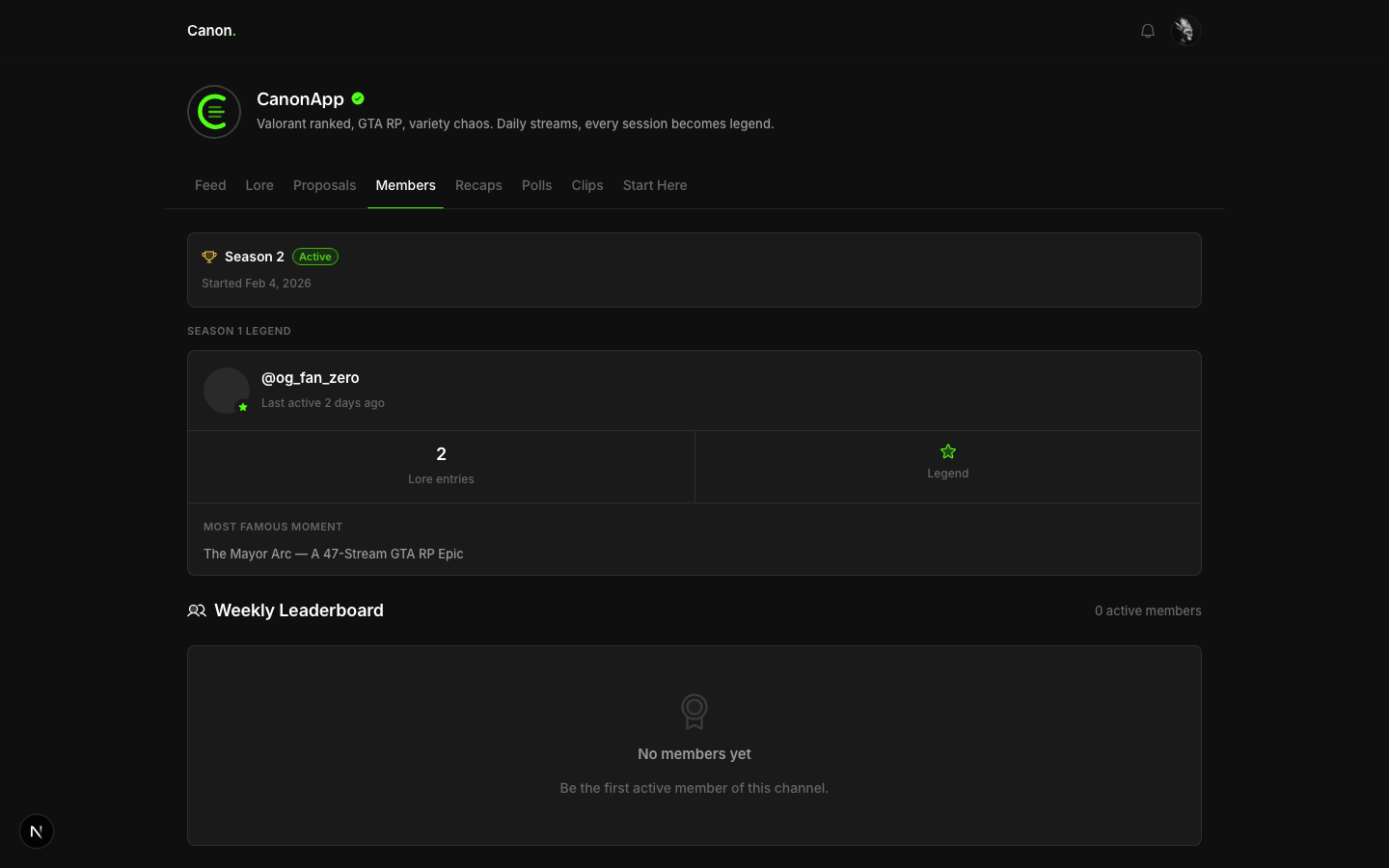
Discovery Matters Before Membership
The explore flow is another strong product decision.
Canon does not assume a user already belongs to a channel. The app lets people search by Kick username, inspect the channel identity, and preview what kind of community exists there. Even if a channel has not fully set up its Canon presence yet, the product can still show a Kick-powered profile view.
This makes discovery feel softer and more useful. It is not just a list of creators. It is a way to understand a community before deciding to step into it.
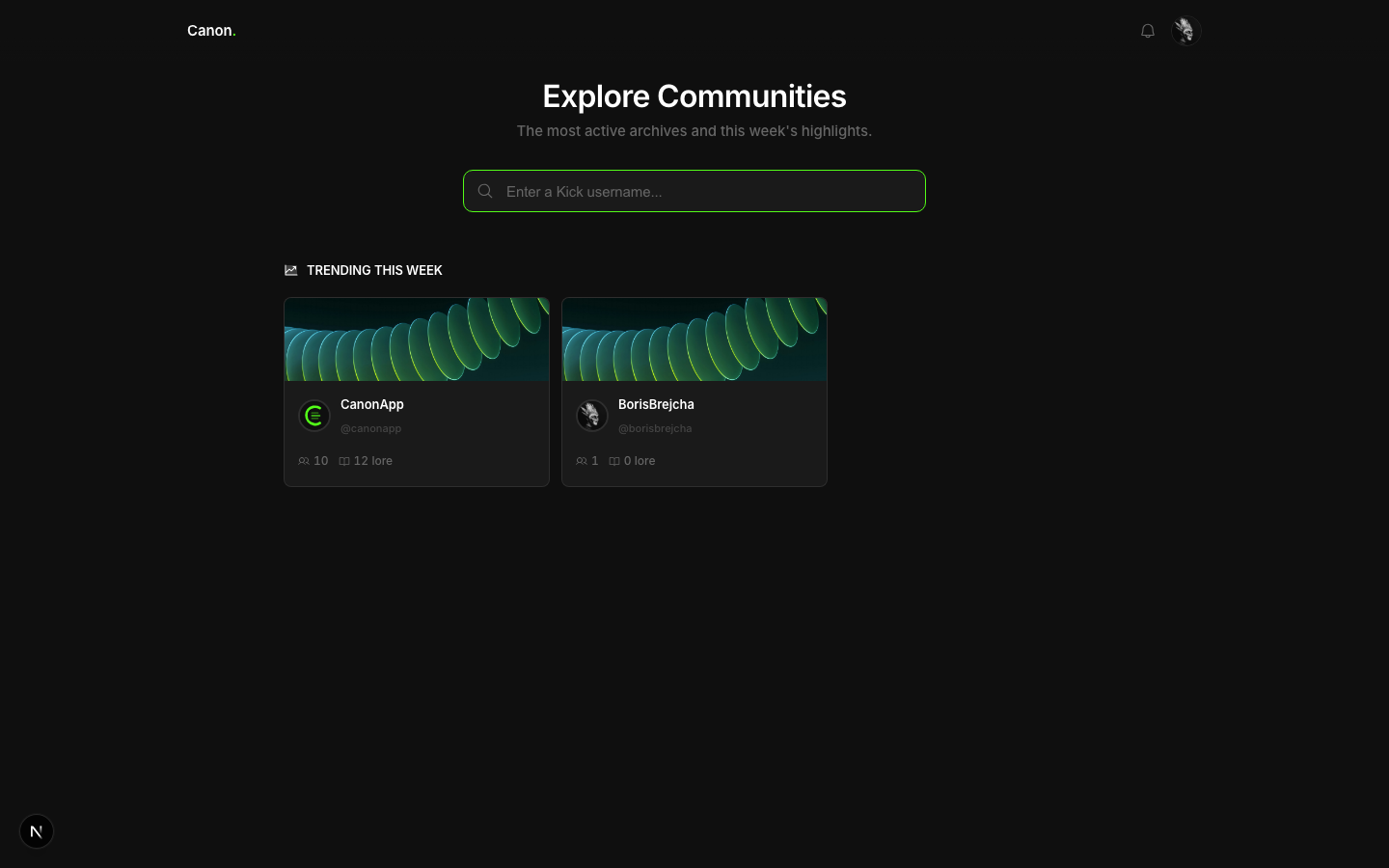
Platform Integration and Auth
Canon uses Kick OAuth 2.1 with PKCE for sign-in, which fits the product naturally. The channel is the center of the experience, so authenticating through the streaming platform itself keeps the model clean.
The rest of the application leans on Supabase for data storage, sessions, and row-level security. That gives the project a strong multi-tenant base without introducing unnecessary architectural sprawl. Membership gates, per-channel access, and community-specific surfaces all make more sense when the database layer is already structured around isolated access rules.
Localization, Metadata, and Public Surface Quality
There is also a level of discipline in the product that goes beyond the main feature set.
The app supports English and Turkish, uses localized routes, and includes a proper metadata setup with Open Graph, Twitter cards, canonical URLs, locale alternates, and JSON-LD. These are not flashy product features, but they matter because Canon is a public-facing platform. Channel pages and discovery surfaces need to behave well when shared, indexed, and revisited.
That polish helps the product feel like a real platform rather than an internal tool dressed up as one.
The Stack Fits the Product
Canon is built with a stack that makes sense for its shape:
- Next.js 16
- React 19
- TypeScript
- Supabase
- Kick OAuth 2.1 + PKCE
- CSS Modules
- next-intl
None of those choices feel ornamental. The app needs modern routing, strong server-rendered surfaces, localized routes, secure channel-aware auth, and database access that works well with membership boundaries. The stack reflects that.
Closing Thoughts
What makes Canon compelling is that it does not treat community culture as accidental byproduct.
It treats memory, feedback, and identity as things worth designing for. That is what separates it from a typical streamer tool. Instead of helping a creator run a channel more efficiently, it helps the channel retain its character over time.
If I had to summarize it in one sentence, it would be this:
Canon is a community memory platform for Kick streamers, designed to turn ephemeral channel moments into lasting, searchable culture.
That is what gives the product its edge. It understands that community is not only happening live. It is also what people remember afterward.